Déclic · Guides · Home workouts
Guide
Best adjustable dumbbells: how to choose in kilograms, for UK buyers
Ad: this page contains affiliate links to Amazon. If you buy through them, we earn a commission at no extra cost to you. As an Amazon Associate we earn from qualifying purchases.
In brief
Adjustable dumbbells replace a rack of fixed pairs with one pair you change by turning a dial, moving a pin or swapping plates. The best set for you is the one whose weight range starts low enough, rises in steps you can use, changes quickly enough that you will actually change it, and is built to survive years of use. We rank no brand. We translate the mostly American advice into kilograms and add the questions that catch UK buyers out, above all whether a listed weight is per dumbbell or for the pair.
Who it suits: home trainers with limited space who want to progress over months, and anyone sharing a set between people of different strength. Who it doesn't suit: very strong lifters who need heavy loads beyond what most sets reach, and anyone who will not change the weight because the mechanism is awkward.
What are adjustable dumbbells, and what do they replace?
An adjustable dumbbell is a handle with a cradle or set of plates that you can load to different weights. One pair stands in for many fixed pairs, which is the reason to buy them: space. A rack of fixed dumbbells takes a wall; an adjustable pair takes a corner.
The trade-offs are the ones Garage Gym Reviews, a US review site for gym equipment, lists in a buyer's guide updated in October 2026. Adjustable dumbbells that replace many pairs save space, but a longer dumbbell can feel awkward in some movements; bulky or caged designs may limit range of motion, such as during chest presses; and round heads tend to feel more like fixed dumbbells than squared or boxy designs. The site is American and uses pounds, so we convert below.
The three searches on this page open Amazon.co.uk results, not chosen products.
adjustable dumbbells adjustable dumbbells 40kg pair dumbbell storage rack Amazon affiliate links
How do the adjustment mechanisms differ?
The same guide describes the main families:
| Mechanism | What the guide says | What it means for you |
|---|---|---|
| Dials and twist handles | Generally the fastest; one system needs "a couple turns of the handle" to change weight | Best if you change weight between exercises |
| Pop-pins and selector pins | Common; pop-pins can be slower, and selector pins on caged designs are often described as slower to change | Fine for straight sets, less so for circuits |
| Add-on or change plates | Let you add weight without buying a new cradle, but switching can be slower | Cheaper to expand, slower to use |
Whatever the system, the guide's advice is to check that the mechanism is smooth and that the weights stay securely locked in use. For you, the question is simple: will you change the weight between exercises, or will you leave it at one setting because it is a hassle? A set you do not adjust is a pair of fixed dumbbells at a higher price.
What weight range and steps do you need?
Look at both ends. The guide says a high starting weight (it gives 10 lb as an example) may not suit everyone who will use the set. It also says most people will find a maximum of about 80 lb sufficient, and stronger lifters may want 100 lb or more, or an expandable system. The step size matters too. The guide says smaller increments, such as 2.5 or 5 lb, make progressive overload easier, while larger jumps of 10 lb can be limiting. It also warns that some sets reach finer steps through offset adjustments that can leave one head slightly heavier and the dumbbell feeling unbalanced, and that micro-plates may cost extra.
The American figures, converted at 1 lb = 0.4536 kg and rounded:
| Pounds | Kilograms (about) | What the guide says |
|---|---|---|
| 2.5 lb | 1.1 kg | Small step that makes progression easier |
| 5 lb | 2.3 kg | Small step |
| 10 lb | 4.5 kg | Example of a high starting weight, and a large step |
| 80 lb | 36 kg | Enough for most people |
| 100 lb | 45 kg | For stronger lifters, or an expandable system |
So for a UK listing, work through it:
- What is the lowest weight? For upper-body isolation moves, a high starting weight can be too heavy.
- What is the highest weight, and will you outgrow it in a year?
- What is the step between settings, in kilograms?
- Is there an expansion option?
Is "40 kg" per dumbbell or for the pair?
This is the question that catches buyers out. A listing that says "40 kg adjustable dumbbells" could mean 40 kg in total across a pair, which is 20 kg each, or 40 kg each, so never assume. The guide says to check whether the set is sold as a pair and can be expanded later; add to that the habit of reading the title, bullet points and product photos together and finding where the weight is written in kilograms for one dumbbell.
If you cannot tell, ask the seller before you buy. If the answer is vague, treat it as a warning about the seller too. The "40kg" search is in the links above because it is a common query, but the same question applies to any figure.
Which questions should you put to the seller?
- Is the weight quoted per dumbbell or for the pair?
- What is the lowest and the highest setting for each dumbbell, and what is the step in kilograms?
- Does the price cover one dumbbell or two?
- What is the dumbbell length, and does it fit where you train?
- Is there a written warranty, and does it cover a drop?
- Which brand and model is it, so that you can check the recall list?
How do they feel in your hands?
The guide covers the handle in some detail. Handle diameter varies, and thicker handles can add challenge for grip and forearms. Knurling and grip texture differ widely, and rubber grips and barbell-style knurling feel very different, so decide which you prefer. Caged handles can be useful for overhead work but may not feel like traditional dumbbells.
If your hands are small or you have a grip problem, look for photos of the handle in a hand and for reports from users with similar hands.
Which set suits which kind of home trainer?
| You are | What to prioritise | Watch out for |
|---|---|---|
| A beginner starting from light loads | A low starting weight and small steps | A high minimum that is too heavy for isolation moves |
| Sharing with a partner of different strength | A quick mechanism, so you can swap settings mid-session | A slow pin or plate system that makes sharing a chore |
| Training for months and getting stronger | A high enough maximum, or a way to expand the set | Buying a ceiling you will reach within a year |
| Short of floor space | A compact cradle and a tray that stays put | A long dumbbell that feels awkward in pressing movements |
| Training in a flat with neighbours below | A mat under the cradle and a mechanism that does not clank | Dropping the dumbbells, which the guide says not to do even with drop cover |
How should you set up and store them?
Put the cradle or tray on a flat, firm patch of floor, and a mat under it if the floor is wooden or tiled. Before each set, check that the weight selector has fully engaged, that nothing rattles and that the handle is locked in place. Lift with a straight back, return the dumbbell to its cradle rather than dropping it, and keep fingers clear of the mechanism when changing the weight. If children or pets share the room, store the set where they cannot reach it. A storage rack, the third search on this page, is only worth buying if the set you choose really needs one; many sets come with their own tray.
How durable are they, and what about recalls?
The guide's advice on durability is practical. Metal construction generally holds up better than plastic-heavy designs, which have more moving parts and weak points. Some warranties cover drops while others do not, and even with drop coverage it advises not dropping adjustable dumbbells. It tells readers to check for safety recalls, and notes a 2025 recall of an earlier model because plates could dislodge during use.
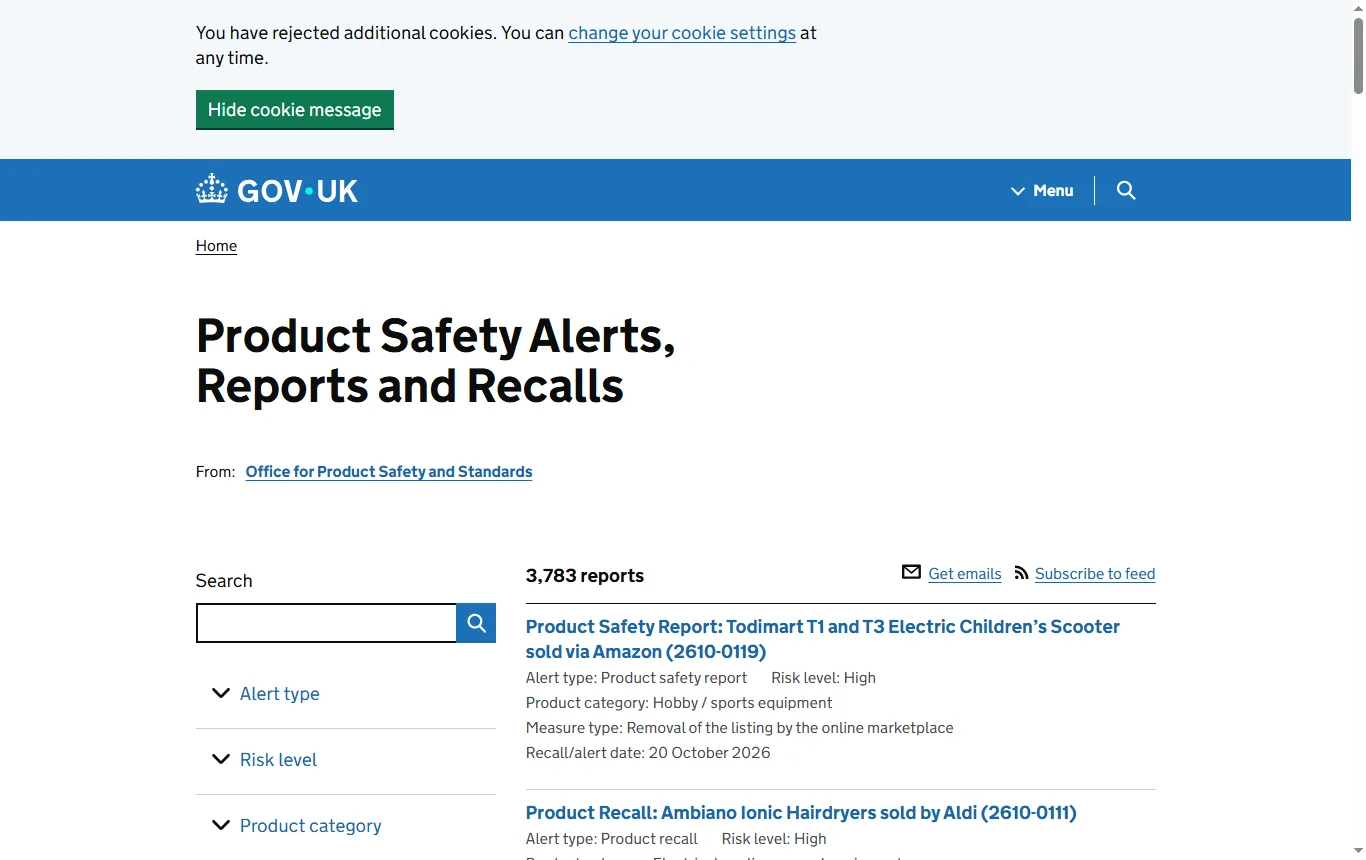
In the UK, GOV.UK publishes a Product Safety Alerts, Reports and Recalls list run by the Office for Product Safety and Standards (OPSS). The list can be filtered by alert type, risk level and category, and you can subscribe by email or feed. Search it for the brand before you buy and again a few months later, and keep your receipt so you can act on a recall.
Adjustable dumbbells, fixed dumbbells or something else?
| Option | Where it wins | Where it loses |
|---|---|---|
| Adjustable dumbbells | Space, one set for progression | Change time, feel, a single point of failure |
| Fixed dumbbells | Simple, fast to swap, feel natural | Space and the cost of buying several pairs |
| Resistance bands | Portability and storage | Hard to log progress, wear out |
If you are comparing with bands, see our guide to resistance bands →, and if you want a bench for pressing, see the guide to a foldable weight bench →.
How should you start using them?
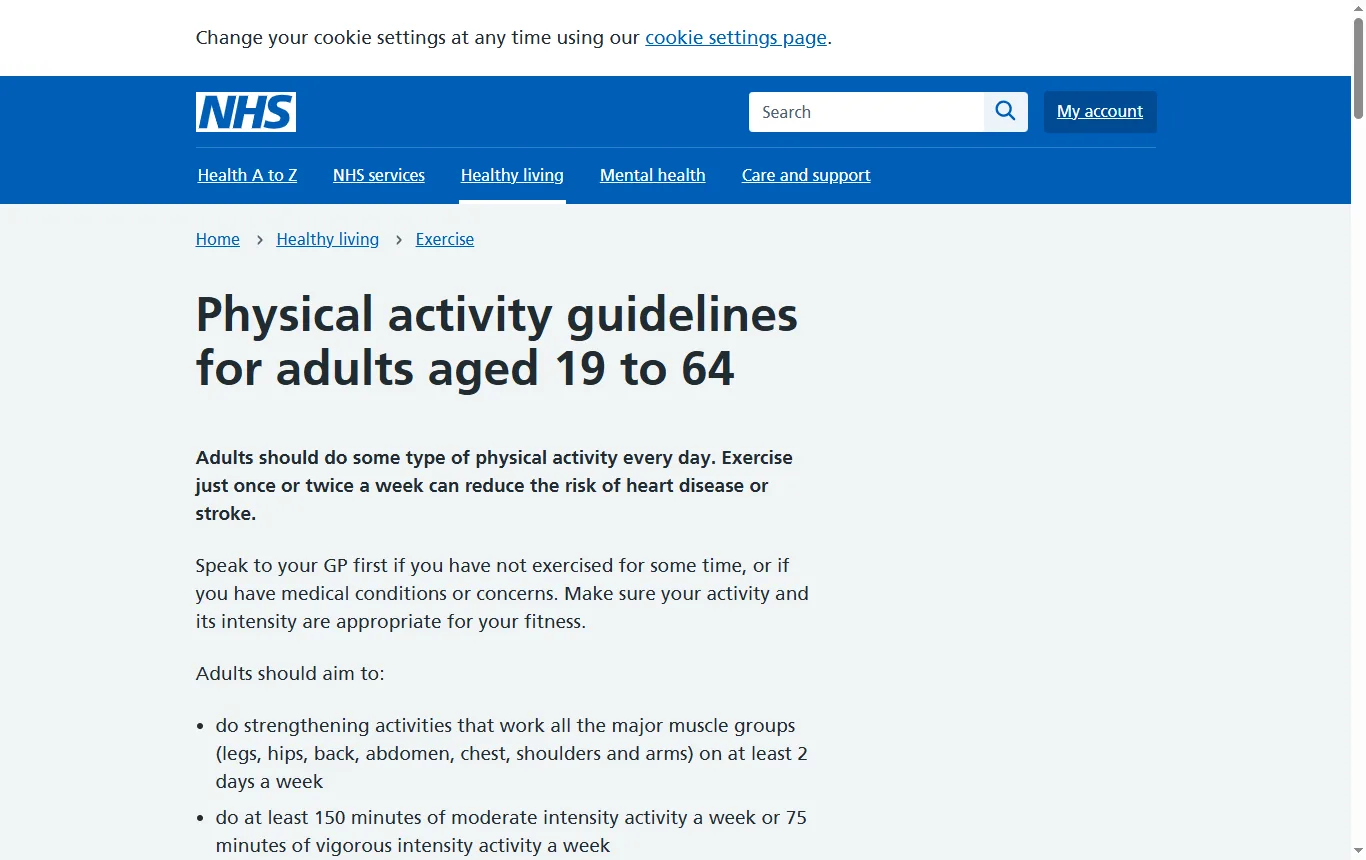
The NHS guidelines for adults aged 19 to 64 (October 2026) recommend strengthening activities on at least two days a week that work all the major muscle groups: legs, hips, back, abdomen, chest, shoulders and arms. They list lifting weights and using resistance bands among the examples, and say to repeat each exercise until you need a short rest before doing it again. The NHS strength exercises page suggests building up slowly and gradually increasing the repetitions of each exercise over time. For a home dumbbell routine, that means light weights first, controlled movement, and adding weight in small steps, not jumping to the heaviest setting.
Nothing here is medical advice. If you have an injury or a health condition, or you are returning after a long break, speak to your GP or a qualified instructor. Sore muscles after a first week are common; our checklist for a massage gun → explains who should avoid one before you reach for it.
What should you check when buying on Amazon.co.uk?
- Seller. Is the item sold by Amazon or a third-party seller, and what are the seller's returns terms?
- Pair or single. Does the price and the photo show one dumbbell or two?
- Weight statement. Is the weight per dumbbell, per pair, or the maximum of an expandable set?
- Delivery. Heavy parcels may arrive in a way that is hard to move, so think about where they will be left.
- Reviews. Look for people who describe the mechanism after months, not only on day one.
- Recalls. Search for the model name together with "recall".
Which mistakes should you avoid?
- Buying on the maximum weight alone, without checking the lowest weight and the step.
- Misreading per-pair and per-dumbbell weights.
- Buying a set with a slow mechanism and never adjusting it.
- Ignoring the footprint: the cradle or tray takes floor space.
- Skipping a floor mat.
- Ignoring recalls and warranty terms.
What are your rights if they arrive faulty?
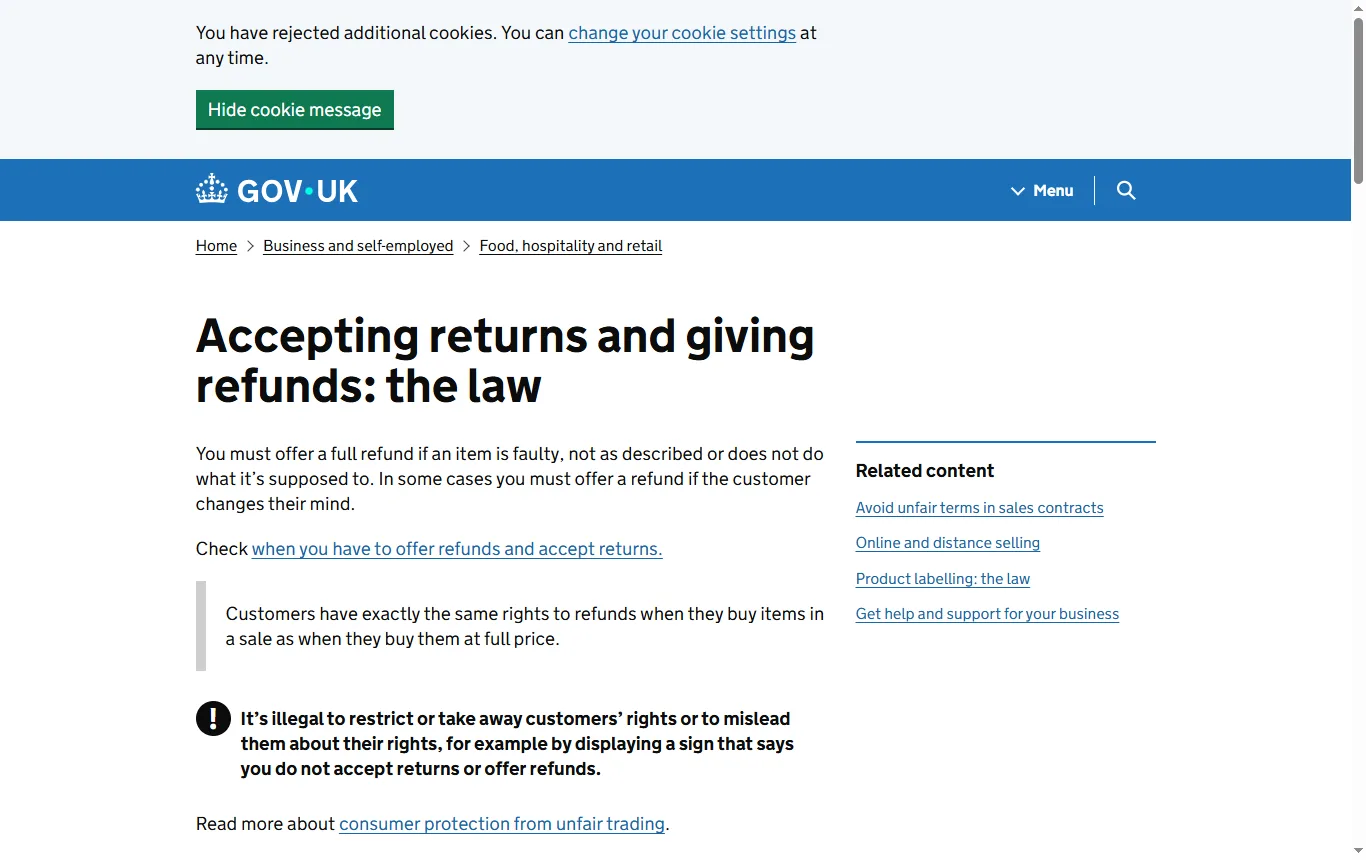
GOV.UK's guidance for sellers on returns and refunds (October 2026) says that for online orders you can cancel without giving a reason by telling the seller within 14 days of receiving the goods and then returning them within a further 14 days. Faulty goods give a right to a full refund, and a return within six months must be repaired or replaced unless the seller proves the item was not faulty when sold. Warranties do not remove those rights.
Heavy items raise practical questions about who arranges and pays for collection. Amazon.co.uk's returns policy (October 2026) defines heavy or bulky items as those over 23 kg or with a side longer than 175 cm, collected from your home by a network of specialist carriers that you arrange from Your Orders. If you return such an item for a reason other than damage, a defect or the wrong item being sent, Amazon can deduct a home collection fee of £50 from your refund. A dumbbell set can easily pass 23 kg, so check the listing weight before you order. Items sold by a third-party seller on the marketplace follow a separate help page for heavy returns, so read the seller's terms before paying.
Not sure? Tell us your space, budget range in kilograms and what you want to train
Frequently asked questions
What are the best adjustable dumbbells in the UK?
We rank none. The right set has a low enough starting weight, steps you can use, a mechanism you will change, and a build that lasts. Use the checklist above and compare listings in kilograms.
Are 40 kg adjustable dumbbells 40 kg each or in total?
It varies by listing, and the title can be unclear. Find where the weight is stated per dumbbell, and ask the seller if you cannot tell.
Which adjustment mechanism is best?
Dials and twist handles are generally the fastest, according to the same buyer's guide; pop-pins and plates can be slower. The best one is the one you will actually change.
Can adjustable dumbbells be dangerous?
They can if the mechanism fails or plates dislodge. The same guide notes a 2025 recall of an earlier model for that reason, so check recalls on GOV.UK and the seller's warranty.
Are adjustable dumbbells worth it for a small space?
They save space compared with a rack of fixed pairs, but a longer shape and slower changes are the trade-off.
Where can I buy adjustable dumbbells in Europe?
Our links go only to Amazon.co.uk search results, so we cannot point you to stores in other countries.
See also
 ComparisonFolding treadmill buying guide: space, noise, knees and safetyHow to choose a folding treadmill or walking pad: belt size, space, noise, knees, NHS activity guidance and your return rights, plus a pre-purchase checklist.
 GuideYoga blocks: size, material, how many and what to use insteadDo you need yoga blocks? Size, foam, cork and wood compared, how many to buy, what to use instead, pregnancy and injury cautions, and your UK return rights.