Déclic · Guides · Home workouts
Comparison
Folding treadmill buying guide: space, noise, knees and safety
Ad: this page contains affiliate links to Amazon. If you buy through them, Déclic earns a commission at no extra cost to you. As an Amazon Associate we earn from qualifying purchases.
In brief
A folding treadmill is worth buying if you will use it often enough to justify the floor space, and the right one depends on whether you want to walk, jog or both. No product is ranked here and no price is quoted, because prices change by the hour. What you get instead are the checks that matter for a flat or small house in the UK: belt size against your stride, folded size, noise, maximum user weight and your rights if it arrives faulty. On health, the NHS recommends at least 150 minutes of moderate activity a week for adults aged 19 to 64, and a treadmill is only one way to reach it.
Who it suits: people who want to walk or jog indoors, work while walking, or stay active in bad weather, and who have somewhere to keep the machine. Who it doesn't suit: anyone with knee, hip or back pain who has not had advice from a GP or physiotherapist, and anyone who would not use it without a pushing reason.
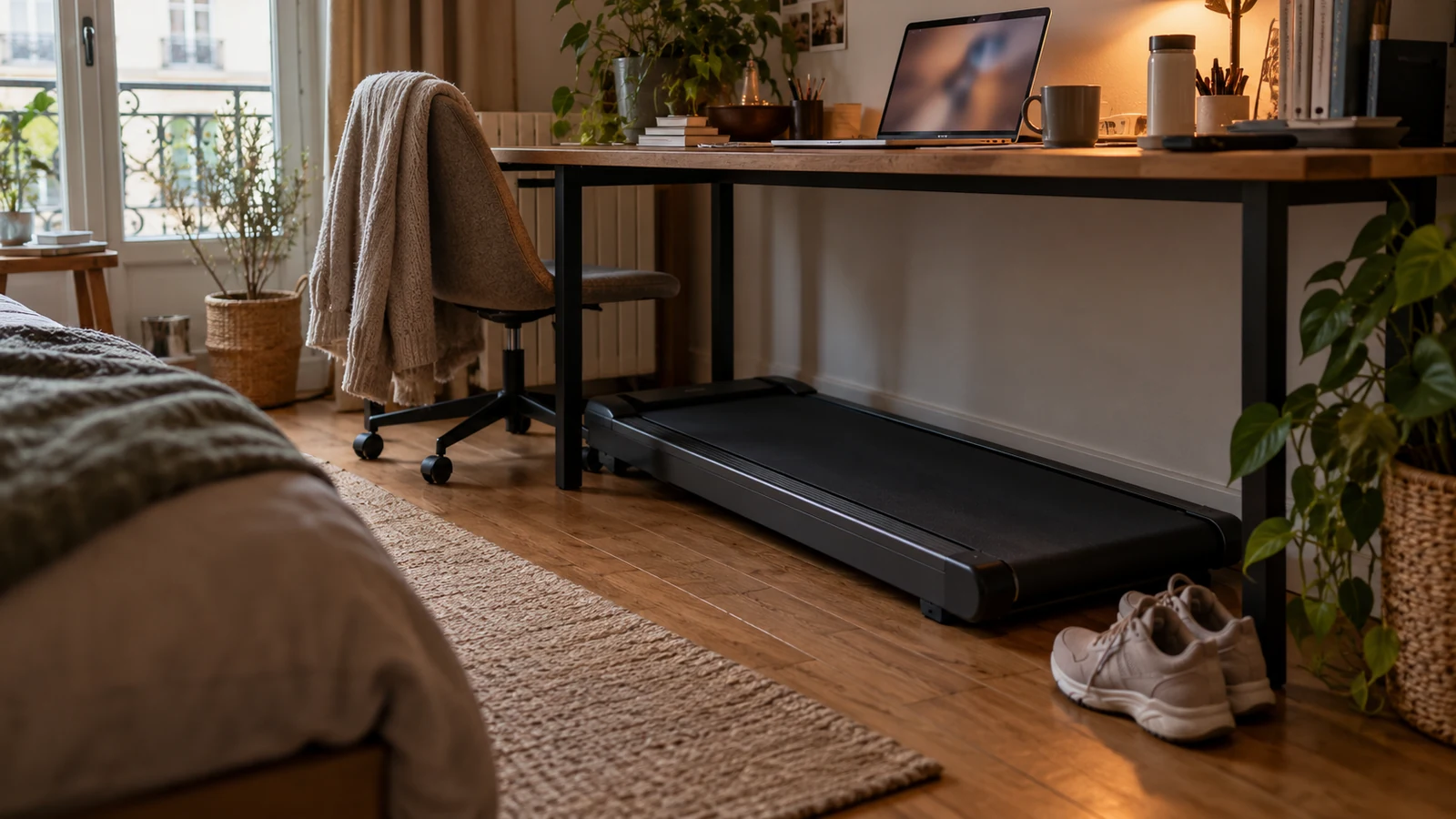
Folding treadmill, walking pad or under-desk model: which fits your home?
These are three different things sold under similar names.
| Option | Who it suits | What to check before buying |
|---|---|---|
| Folding treadmill | Walking and, on some models, jogging; fits a spare room or corner | Belt length and width, top speed, motor power, folded size, weight to move |
| Walking pad | Slow, steady walking, often slid under a bed or sofa | Top speed, whether it takes your weight, noise, how stable it feels |
| Under-desk treadmill | Walking while you work at a standing desk | Desk height, speed range, remote control, noise on calls |
Each link below opens an Amazon.co.uk search, not a chosen product. You compare the listings yourself with the checklist in this guide.
folding treadmill walking pad treadmill under desk treadmill Amazon affiliate links
Which type suits which person?
Start with the person, not the machine.
- The walker. If your goal is to reach the NHS activity level on days when the weather is poor, a walking pad or a compact folding model with a low starting speed is enough. Belt length matters less than a gentle lowest speed and low noise.
- The occasional jogger. If you want to run as well, you need a longer, wider belt, a stronger motor and more cushioning than a walking pad offers. Check the top speed and the maximum user weight with a generous margin.
- The desk worker. An under-desk model is built for slow walking while you type or take calls. Noise at low speed and a remote you can reach matter more than any top speed.
- The renter in a flat. Folded size, weight and the neighbours below decide everything. Read the noise section below and check your tenancy agreement before you buy.
- The shared household. If several people of different heights and weights will use it, choose for the heaviest and tallest user, and keep the instructions where everyone can find them.
What should you look for in a folding treadmill?
A buying guide on the UK site treadmillreviews.co.uk (undated) lists the questions that matter in the same order as this one: motor power and speed (what workouts are you doing), running surface size (how long is your stride, how tall are you), cushioning and impact absorption (do you plan to run, do you have knee issues), smart features and connectivity, and folding versus non-folding (are you short of space). Three more checks are worth adding:
- Maximum user weight. The figure on the product listing is the limit, and you should choose a machine with a clear margin above the heaviest person who will use it, not one at the limit. Read the specification, not the headline.
- Speed range at the low end. A machine that starts too fast is awkward for slow walking. Check the lowest speed, not only the top one.
- Noise rating and the belt's behaviour at walking speed, because most people use a folding model for walking.
A manufacturer's top speed or motor figure tells you little if the belt is too short for your stride. Stand in a shop on a similar machine if you can, or measure your own stride against the stated belt length.
How do you fold a treadmill, and how heavy is it to move?
Folding mechanisms differ between models, so the instruction manual for your machine is the authority. Before you buy, look at the listing for four things: the folded dimensions, the weight of the whole machine, whether there are transport wheels, and whether the lock that holds the deck upright is described. Then picture the actual move: from the spot where you use it to the spot where it lives, past furniture and through a doorway.
If you cannot lift the machine safely, do not rely on it being "easy to fold". Check whether the instructions say it needs two people to fold, unfold or carry, and ask someone to help rather than risk your back. NHS advice on back pain is to stay active rather than rest, but it also lists signs that need a GP, so do not push through pain moving heavy equipment.
How much space does it need, folded and unfolded?
Measure three things before you order.
- The footprint in use, including clear space behind the belt. People step off backwards, and the area behind a running belt needs to be clear.
- The folded footprint and height, against the place you actually plan to keep it. A folded deck can still stand taller than a sofa.
- The route in: front door, stairs, corridor turns and the door of the room. Check the delivery terms too: some delivery options leave heavy parcels at the kerb, so find out whether the machine will be brought indoors, and whether an upstairs delivery is included.
Flats add another issue: floors. A mat under the machine protects flooring and may soften vibration, but check your tenancy agreement or ask your landlord if you rent.
Are walking pads good for your knees?
This is a question many people ask before buying, and the honest answer is that it depends on your knees. Walking is generally considered lower impact than running, but the effect on any one person's knees varies, so no promise can be made about walking pads.
What the published guidance says:
- A Cedars-Sinai article of 12 September 2025, quoting an orthopaedic surgeon, advises good posture, proper footwear, easing into short sessions and watching for pain, and describes walking pads as a "complementary activity" rather than a full workout, with outdoor walks preferable when time allows. It does not address knees directly.
- The NHS page on walking for health advises building up your walking distance gradually. For people whose joints are a problem, it suggests looking at local swimming pool exercise classes, because "the water helps to support your joints while you move".
- Cushioning is one of the checks on the UK review guide above, listed against the question "do you have knee issues".
If walking causes knee pain, swelling, locking or the sense that the joint gives way, stop and see your GP or a physiotherapist before you buy equipment. A treadmill will not fix a problem you have not diagnosed.
How much should you walk, and will 30 minutes a day make you lose weight?
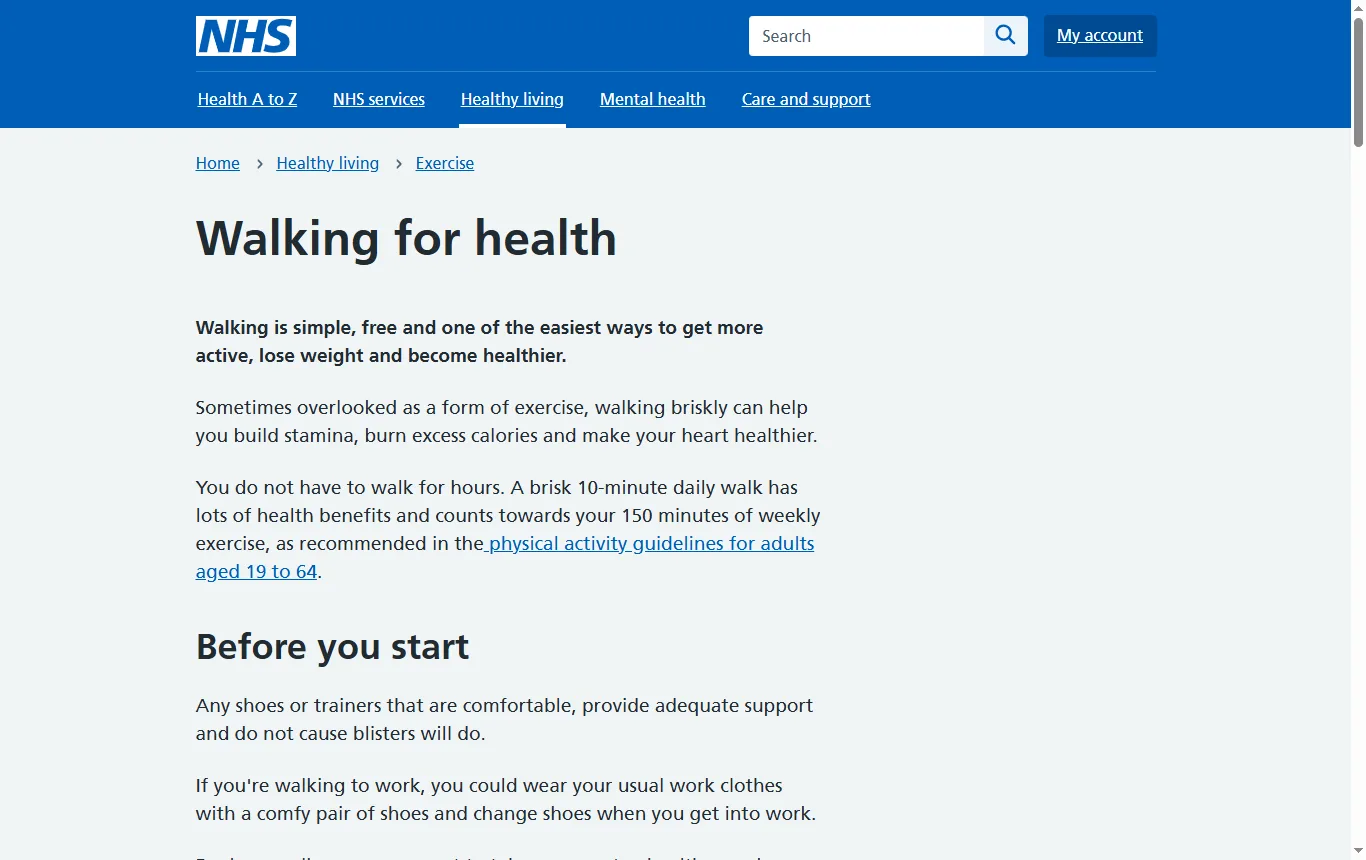
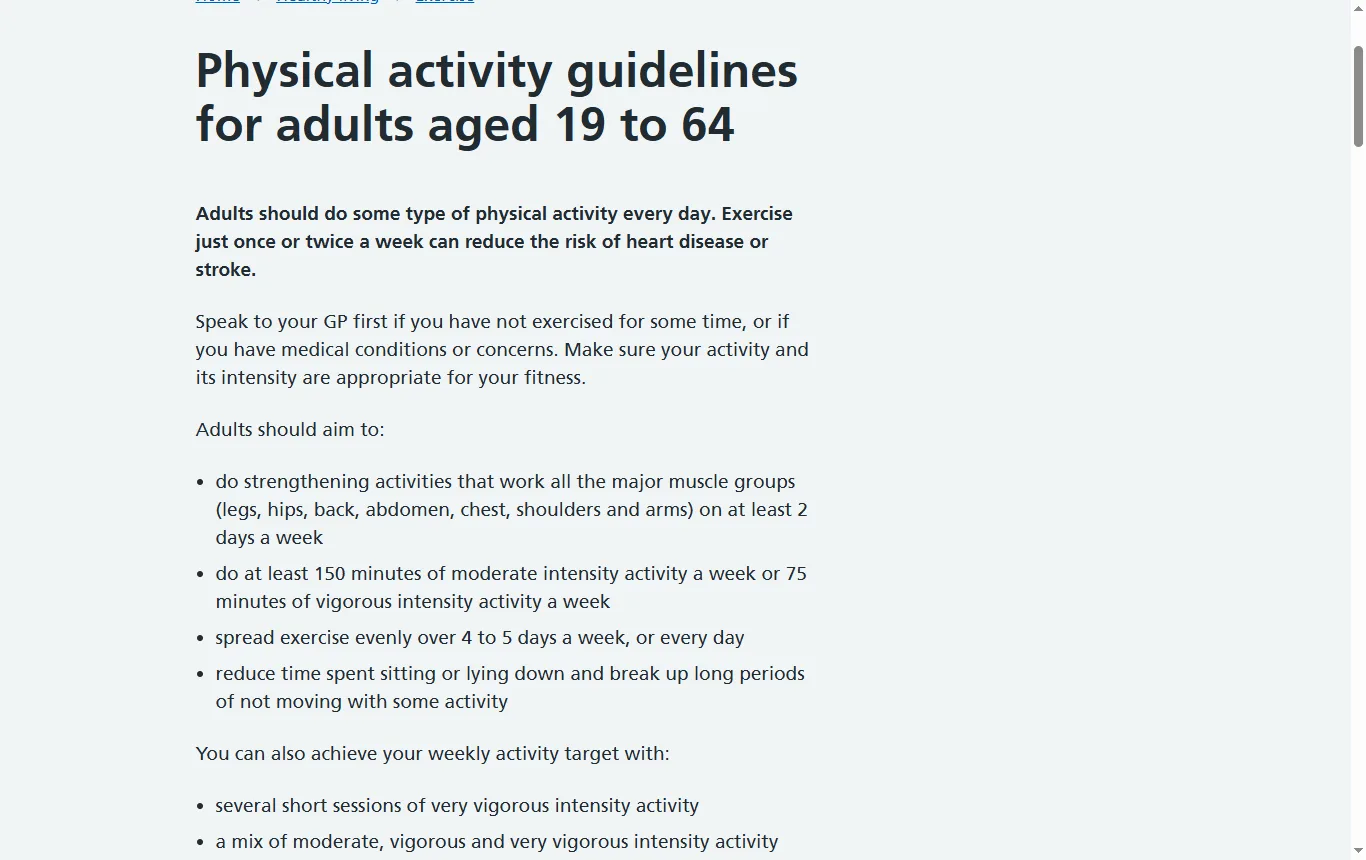
The NHS guidelines for adults aged 19 to 64 recommend at least 150 minutes of moderate-intensity activity a week, or 75 minutes of vigorous activity, plus strengthening exercises on at least two days a week that work all the major muscle groups. They suggest spreading activity across four to five days or every day, and breaking up long periods of sitting. The NHS also describes a brisk walk as about 3 miles an hour, where you can talk but not sing; 3 miles an hour is roughly 4.8 kilometres an hour, which matters if a listing gives speed in kilometres.
As a simple calculation, 150 minutes a week is about 21 minutes a day over seven days, or 30 minutes on five days. Whether that changes your weight depends on food, sleep, your body and much else, so no weight-loss promise is made here. If you are managing a health condition or returning to activity after a long gap, speak to your GP first.
The strength half of the guideline is easy to forget when you buy cardio equipment. If you want to cover it at home, our guides to resistance bands → and to a foldable weight bench → look at two compact ways to do it.
Is it faster to walk 10,000 steps on a treadmill than outside?
The NHS guidance talks in minutes of activity, not steps, and it does not mention step counts. The comparison is a practical one: indoors you control speed and weather, outdoors you get light, air and a change of scene, and the Cedars-Sinai article suggests outdoor walks are preferable when time allows. Choose the one you will actually do.
How noisy will it be in a flat or house?
Noise is one of the most important and least comparable specifications. The review site above says its testers measure noise with a sound level meter at different speeds, inclines and workouts, which is the right approach but not something most manufacturers publish in a comparable way. So:
- Look for reports of noise at the speed you will use, not only a decibel figure.
- Think about who is below you, next door or asleep upstairs, and when you will use the machine.
- If you work on calls while walking, noise matters more than top speed.
A treadmill that is loud enough that you avoid using it is a poor purchase, whatever the specification says.
How do you set it up and start safely?
A treadmill is simple to use and easy to misuse in the first week. These habits cost nothing:
- Read the manual before the first session, including the sections on the safety key or stop mechanism if your model has one, and on lubrication and belt adjustment.
- Place it on a flat, solid floor with clear space behind and beside it, away from curtains, cables and anything a child could pull.
- Start at the lowest speed, hold the handrails if there are any, and step on only when the belt is moving slowly.
- Wear shoes with good grip, not socks or slippers.
- Build up in short sessions. Ten to fifteen minutes is plenty at first, in line with the NHS advice to build up gradually.
- Keep children and pets away from the machine while it is running, and unplug it when it is folded and stored.
- Check the belt and the frame now and then, and stop using the machine if something looks worn or loose.
Which mistakes do people make when buying a folding treadmill?
- Buying on top speed or motor power without checking belt length and your stride.
- Underestimating the space, including the clear area behind the belt and the route to the room.
- Ignoring maximum user weight or buying at the limit.
- Ignoring noise until the machine is installed.
- Expecting a walking pad to replace a gym: it suits walking, not training for running.
- Reading "reviews" with no measurements: prefer sources that state their conditions.
- Forgetting returns and warranty, covered next.
What are your rights if it arrives faulty, or you change your mind?
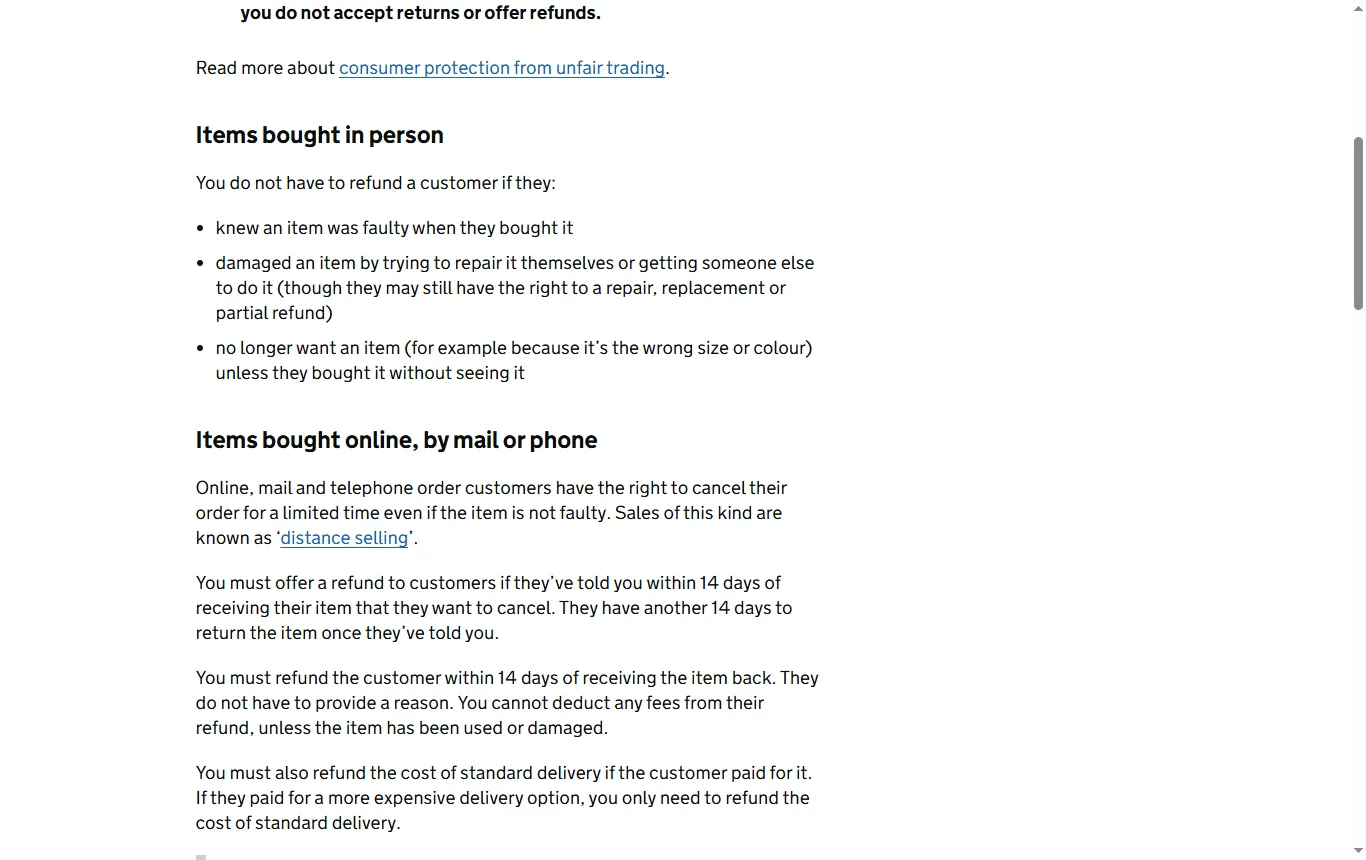
GOV.UK's guidance for sellers on accepting returns and giving refunds (October 2026) states the rules from the buyer's side. For online orders, a customer can cancel without giving a reason by telling the seller within 14 days of receiving the goods, then has another 14 days to send them back, and the seller must refund within 14 days of getting them. For faulty goods, a full refund is due, and a return within six months must be repaired or replaced unless the seller proves the item was not faulty when sold. After six months the seller can ask you to show the fault was there from the start, and claims can be made for up to six years after purchase (five in Scotland). Warranties do not remove these rights.
For help, GOV.UK points to Citizens Advice in England and Wales, Advice Direct Scotland and Consumerline in Northern Ireland.
What happens with a heavy item on Amazon.co.uk?
Amazon.co.uk's returns policy (October 2026) says most items can be returned within 30 days of delivery if they are new, unused and undamaged, and it sets out the 14-day legal right to cancel, counted from the day you receive the item. Return costs are refunded, or a prepaid label supplied, only when the item was sold or shipped by Amazon and advertised as eligible for free returns at the time of purchase.
Heavy and bulky items follow a separate route. Amazon defines them as items over 23 kg or with a side longer than 175 cm, collected from your home by a specialist carrier arranged from "Your Orders". If you return one for a reason other than damage, a defect or the wrong item being sent, Amazon may deduct a home collection fee of £50 from your refund. Compare the weight on the listing with that 23 kg threshold: if the machine is above it, a change of mind could be costly. Items sold by marketplace sellers have a separate help page for heavy returns, and a faulty item after 30 days has its own section in Amazon's policy. Read the terms for your seller before you pay, and keep the packaging until you are sure.
What should you check before you pay?
- Does the maximum user weight leave a clear margin?
- Do the belt dimensions suit your stride?
- Is the lowest speed gentle enough, and does the top speed cover brisk walking in the units you read (miles or kilometres an hour)?
- Do the folded size and weight suit your storage and your strength?
- Is the noise described by real users at walking speed?
- Are the delivery terms, returns and warranty clear, including who pays if a heavy machine has to be collected?
What questions should you put to the seller?
If a listing leaves gaps, a short message before you order can save a lot of trouble. Ask the seller to confirm: the maximum user weight and whether it assumes continuous use; the belt length and width; the lowest and highest speed; the folded dimensions and weight; whether delivery is to the door or to the kerb; how long the warranty lasts and who handles repairs; and who pays for collection if you return the machine. Keep the answers. A seller who replies clearly is a better bet than one who cannot say.
Once the machine is in your home, a few minutes of stretching afterwards helps many people, and our guide to yoga blocks → shows one inexpensive way to make floor stretches easier.
Not sure? Tell us how much space you have and what you want to do
Frequently asked questions
Are walking pads good for your knees?
It depends on your knees, so no promise can be made. Walking is lower impact than running, but if it hurts, see your GP or a physiotherapist first.
Will I lose weight if I walk on a treadmill for 30 minutes a day?
There is no weight-loss promise here. The NHS recommends at least 150 minutes of moderate activity a week for adults; weight depends on food, sleep and many other factors.
What is the best foldable treadmill for home use?
No single model wins. The best choice depends on your stride, your space, your weight and how loud it can be; use the checklist in this guide.
What are the best treadmills for walking?
Look for a belt long enough for your stride, a low starting speed, a clear weight margin and a noise level you can live with, rather than a high top speed.
How do I fold a treadmill?
Follow the manufacturer's instructions for your model, and check before buying whether it takes one person or two to fold and move it.
Is it faster to walk 10,000 steps on a treadmill than outside?
The NHS guidance talks in minutes, not steps. Pick the setting you will keep using.