Déclic · Guides · Home workouts
Guide
Foldable weight bench: what to check before you buy one
Ad: this page contains affiliate links to Amazon. If you buy through them, Déclic earns a commission at no extra cost to you. As an Amazon Associate we earn from qualifying purchases.
In brief
A foldable weight bench is a good fit for dumbbell work in a flat or spare room, as long as you check four things the listing often glosses over: how the load rating is defined, how stable the frame is, whether the pad has a gap, and whether the bench can stand upright when stored. No product is named here and no price is quoted, because prices change by the hour. What you get is a checklist and three Amazon.co.uk searches to start from. The NHS recommends strengthening activity on at least two days a week that works all the major muscle groups, and a bench is one tool among several for that.
Who it suits: people training with dumbbells or light weights at home who need to put the equipment away. Who it doesn't suit: anyone planning very heavy barbell work without a rack and safety equipment, and anyone with an injury or health condition who has not taken advice.
Which type of bench do you actually need?
Listings use "foldable", "adjustable", "flat" and "compact" loosely, so start with what you will do on it.
| Type | What it suits | What to check |
|---|---|---|
| Flat folding bench | Dumbbell presses, step-ups, seated work, simple storage | Pad length and width, load rating, how the legs lock |
| Adjustable folding bench | Incline and, on some models, decline work as well as flat | Number of angles, load rating at an angle, pad gap |
| Compact bench | Small rooms and short users | Whether the shorter pad still supports your whole back |
The three links below open Amazon.co.uk searches, not selected products. Use them to read listings against the checklist in this guide.
foldable weight bench adjustable dumbbells gym floor mat Amazon affiliate links
What is the best foldable weight bench for home use?
There is no single best bench, and none is ranked here. The best one for you is the one that is stable under the heaviest load you will actually lift, supports your back comfortably, folds in a way you can manage, and fits where you store it. To judge that, you need to read specifications carefully.
Garage Gym Reviews, a US testing site, judges benches on how they feel and their size, on whether they feel sturdy "without any wobbling or play during workouts", and on value beyond price, such as versatility and durability. It is a US site, so its examples and units differ from the UK, but its criteria travel well: adjustability, load capacity and durability, then footprint and storage.
Which bench suits which person?
- The beginner with a pair of dumbbells. A flat or lightly adjustable folding bench is enough. Stability and a pad that supports your whole back matter more than the number of angles.
- The home trainer who wants incline work. An adjustable folding bench makes sense, but read the load rating at an angle and look at the pad gap.
- The tall user. Check pad length against your height, so that your head and hips are both supported. A compact bench can be short for you.
- The small-flat dweller. Folded size, weight and whether the bench stands safely upright decide everything. Measure the spot where it will live.
- The household with children or pets. A folded bench that tips over is a hazard. Choose one that is stable folded and store it out of reach.
How should you read a weight capacity figure?
The load rating is the most important number on the page, and the least standardised. The Garage Gym Reviews roundup lists ratings for some benches but does not say whether a rating refers to the bench alone or to the user plus the weights, and for one bench it notes that no capacity is listed at all. It also shows that a rating can change with the bench position: one bench in the roundup is listed at a lower load at an angle than when flat.
So when you read a listing, ask:
- Is the rating for the bench alone, or the user plus the weights? If the wording does not say, do not assume the generous version.
- Does the rating drop when the bench is inclined? An adjustable bench that is rated for a high flat load may be rated lower at an angle.
- Does the rating apply to the folding mechanism? The weak point of a foldable bench is usually the hinge or lock, not the pad.
- Where does your own body weight plus the weights land? Add the lifter's weight to the heaviest dumbbells you expect to use, and keep a clear margin below the stated rating.
If the listing does not answer these questions, ask the seller before you order. A seller who cannot say what the number refers to has told you something.
How do you tell whether a frame is sturdy?
Specifications cite steel thickness (the roundup quotes figures such as an 11-gauge steel frame), but it does not explain what gauge numbers mean. With sheet and tube steel, a higher gauge number normally means thinner metal, which is the opposite of what many people expect, so ask the seller for the thickness in millimetres if the listing only gives a gauge. You do not need to become a metallurgist. Use these simpler clues:
- A wide base or a stable footprint, rather than a narrow pair of legs.
- A fold-lock that engages positively, with a pin or a latch you can see.
- A written description of the frame material and the weld or bolt construction.
- Reports from buyers who describe wobble at the weight you intend to use.
The roundup's own summary is that a bench should feel sturdy for nearly all exercises. A cheap folding bench that shifts when you press is a risk to your shoulder and your floor.
What is the pad gap, and does it matter?
On adjustable benches, the seat and the backrest are separate pads. The roundup notes that adjustable benches have a gap between the seat and the backrest when laid flat, and it scores benches on this gap, with one bench listed as having none. The gap can press into your lower back or tailbone during a heavy press or leave a pressure point. For dumbbell work at home it is a comfort question; for heavier lifting it is more important. Look for pictures of the bench laid flat, and for buyers who mention it.
Will it fold flat, and can it stand upright?
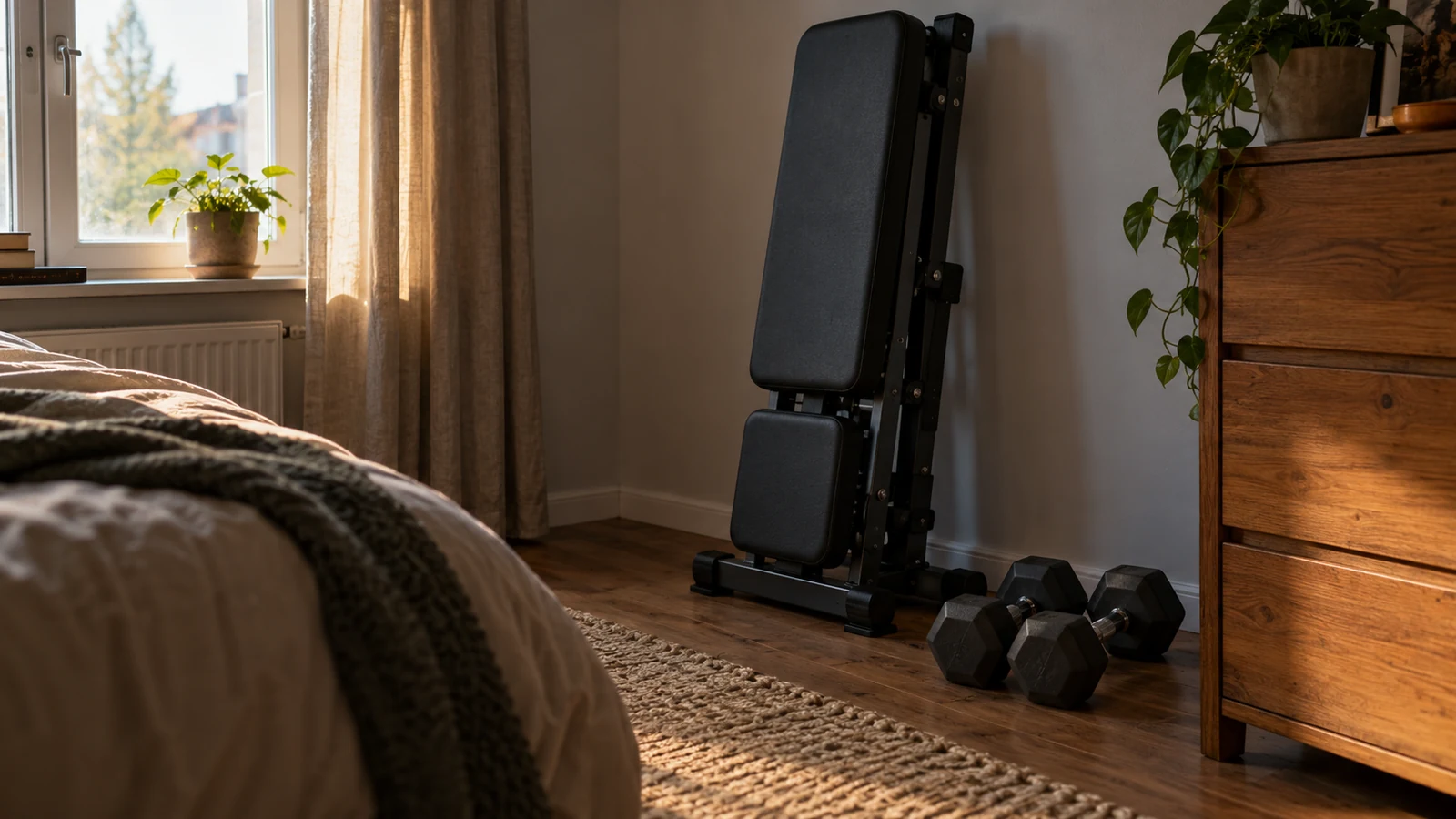
Folding is the reason to buy this kind of bench, so check the details. The roundup describes one bench that folds for easy storage and can be stored vertically, and another that can be stored vertically but that the reviewer warns can wobble in that position, putting it down to the thick pad. So a bench being "storable upright" is not enough; you want one you can store without it tipping on a carpet or in a narrow gap.
Check for these before buying:
- The folded size and the weight to carry.
- Whether it has transport wheels (the roundup lists wheels as a feature on several benches).
- Whether it stands safely folded or must lean against a wall.
- How many steps there are to unfold it, and whether it can be done one-handed.
- Whether the lock holds when unfolded; test it before every session.
How much space does a compact bench need?
Allow for the bench in use, with clear space on both sides for your elbows and the dumbbells, plus space at the head end for sitting up and putting weights down. The roundup notes that a leg attachment on one bench adds more than 20 inches to its length, which is about 51 centimetres; accessories change the footprint. Measure the room with a tape rather than relying on a listing's "compact" label.
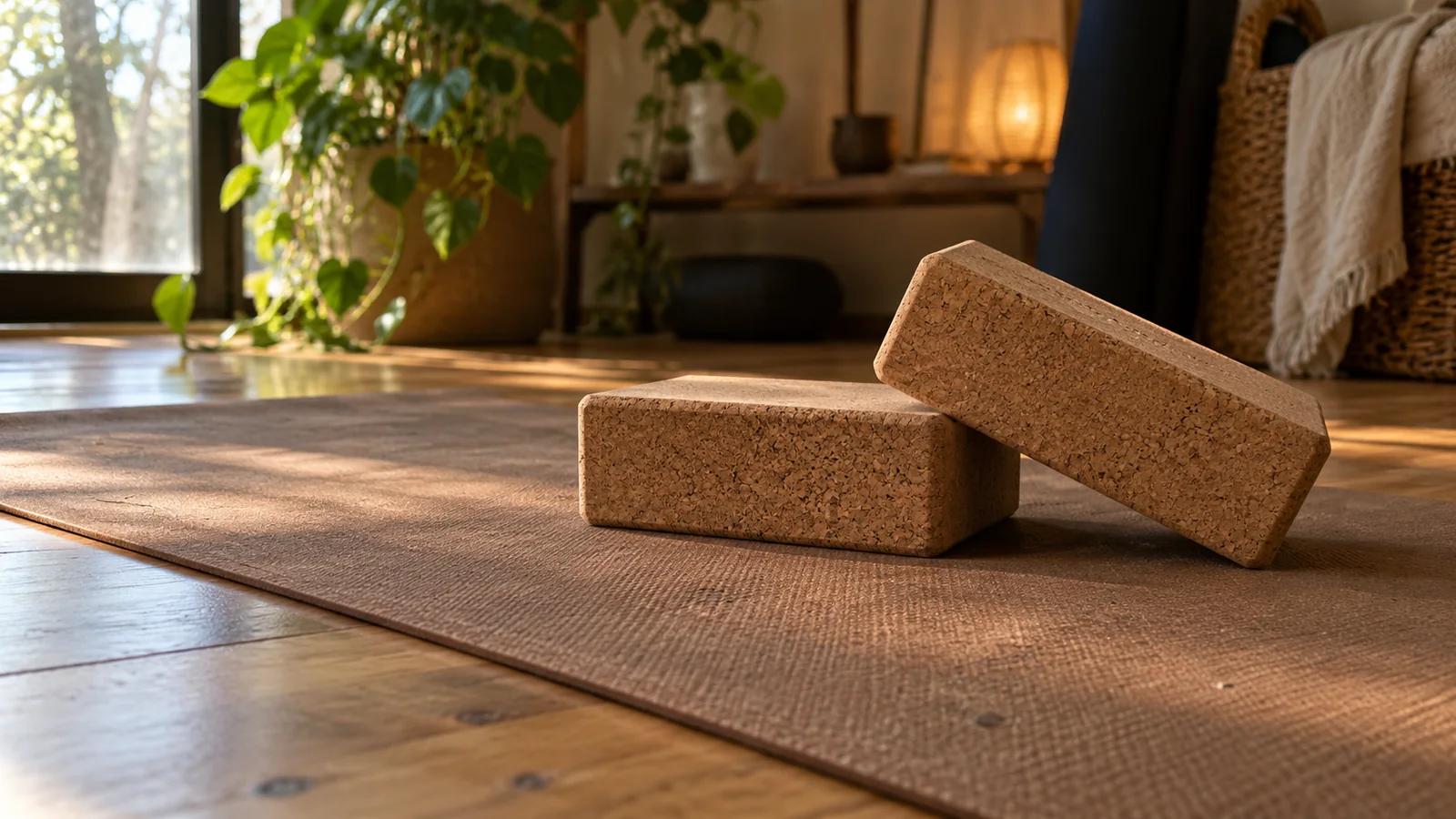
A mat under the bench protects the floor and stops the legs from sliding, which is why a gym floor mat is one of the searches above. If you rent, check what your tenancy allows before you drill or load a hard floor.
Which exercises can you do on a foldable bench?
With dumbbells and a stable bench you can do seated shoulder presses, chest presses, rows with one hand and one knee supported on the bench, step-ups (if the bench is rated for standing loads, which many are not) and seated curls. Start with light weights and learn the movements first. Exercises depend on your size, strength and training history, so this list is a starting point, not a plan.
The NHS strength exercises page is a useful baseline. It builds its sample routines around a solid, stable chair without wheels or arms, light weights (filled water bottles will do) and a wall, and it advises doing them at least twice a week and building up slowly, gradually increasing the repetitions of each exercise over time. The same principle applies when you move to a bench: build up slowly. This is not medical advice. If you have an injury, a health condition or are returning to training after a long gap, talk to your GP or a qualified instructor first.
How do you set up a bench session safely?
A short routine before the first rep prevents most avoidable accidents.
- Unfold the bench on a flat, clear floor and check that every lock is fully engaged.
- Press down on the pad and rock the frame to feel for movement before you load it.
- Put the dumbbells within reach at the side, not behind your head, and sit on the bench before you pick them up.
- Start with a weight you can lift easily for the whole set, and add weight in small steps over several weeks.
- Put the weights down deliberately rather than dropping them, and never leave them on the floor where you will step.
- Fold and store the bench when you finish, with the lock engaged, away from children and pets.
What safety limits should you set for yourself?
- Do not exceed the stated rating, and keep a margin.
- Do not train with heavy weights over your face or chest alone. If you lift heavy, you need someone to help you or proper safety equipment. A foldable bench is not a rack.
- Check bolts, hinges and locks before each session and replace damaged parts.
- Keep the floor clear and use a mat.
- Stop if something hurts in a way that feels wrong, not just tiring.
A dedicated safety standard exists for benches. ISO 20957-4:2016 sets safety requirements for strength training benches and free-weight racks, in addition to ISO 20957-1, and it applies to the classes S, H and I that ISO 20957-1 defines. BSI sells a British version of the standard titled "Stationary training equipment. Strength training benches, additional specific safety requirements and test methods". The definition of each class sits in part 1, which is not summarised on the ISO page for part 4, so ask the seller which class a claim of compliance refers to rather than reading it as a guarantee for a particular model.
Do you even need a bench?
Maybe not. For many home routines, a mat, a pair of adjustable dumbbells and a sturdy chair or step cover a lot of ground, and the money and space you save may be worth more than a bench you rarely open. A bench earns its place if you want pressing and incline movements and have the floor space. Our guides to adjustable dumbbells → and resistance bands → cover two lighter alternatives, and if you want a cardio machine as well, see folding treadmills →.
What mistakes do buyers make?
- Buying on the maximum load alone, without checking what the number covers.
- Ignoring the pad gap and the pad length against your height.
- Overlooking folded stability, so the bench tips when stored.
- Forgetting the floor, which needs a mat.
- Assuming "foldable" means "light": check the weight.
- Skipping the returns terms.
What are your rights if it arrives damaged or fails?
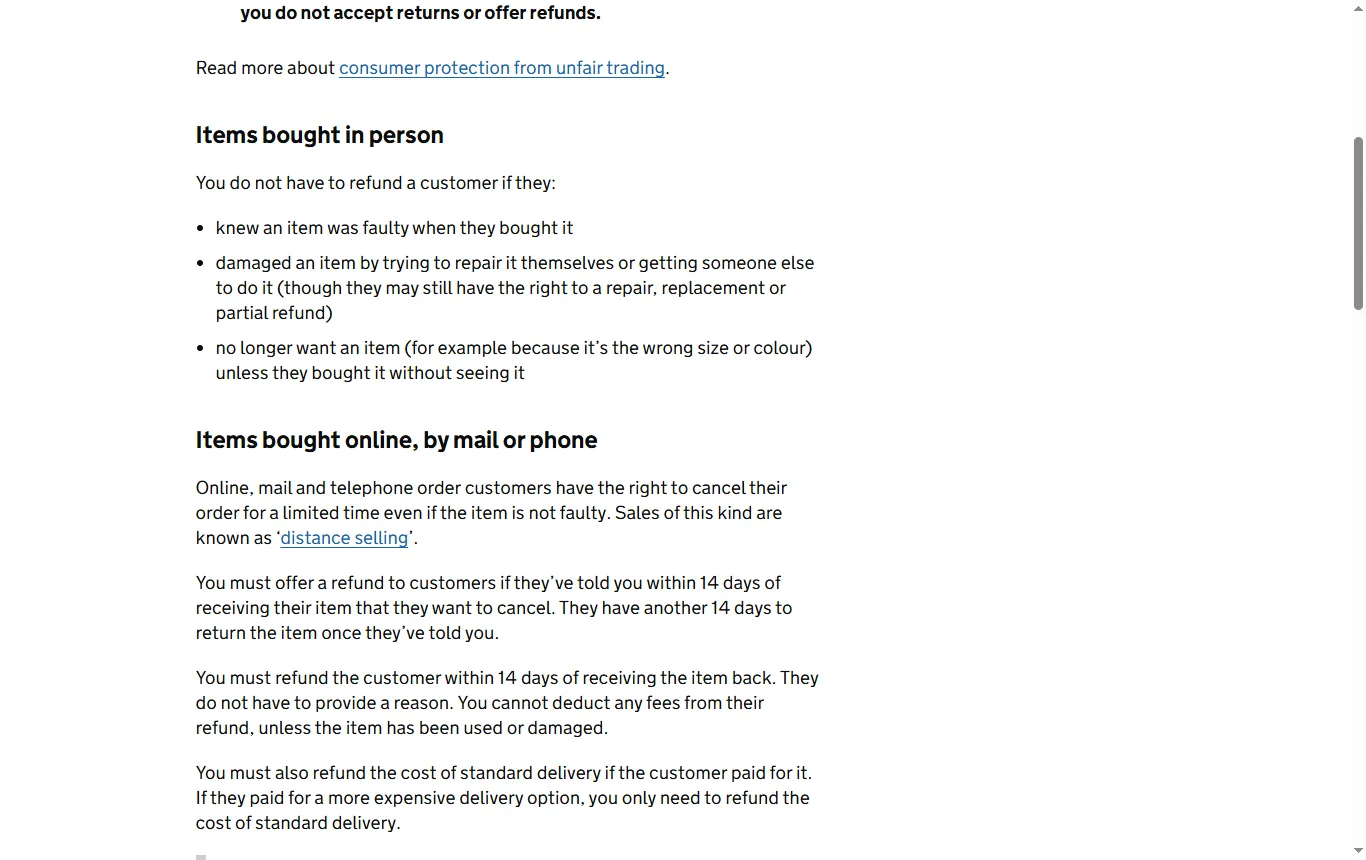
GOV.UK's guidance for sellers on returns and refunds says that for online orders you can cancel without a reason by telling the seller within 14 days of receiving the goods, and you then have another 14 days to return them. Faulty goods give a right to a full refund, and a return within six months must be repaired or replaced unless the seller proves the item was not faulty when sold. After six months, the seller can ask you to show that the fault was there when you bought it. Warranties do not remove those rights.
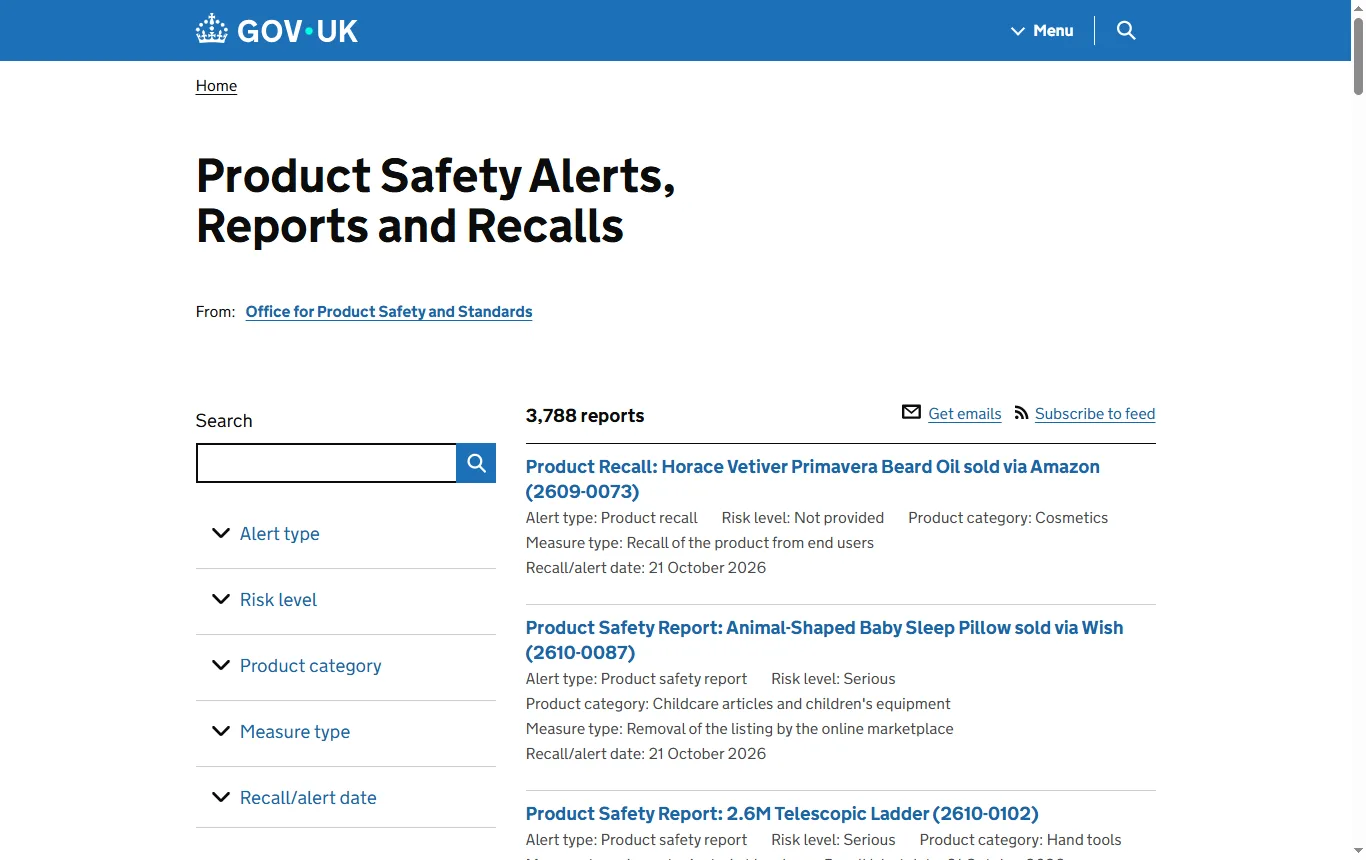
GOV.UK also publishes a Product Safety Alerts, Reports and Recalls list through the Office for Product Safety and Standards (OPSS), with filters by alert type, risk level and product category, and the option to subscribe by email or feed. A quick search of that list before and after buying is a cheap precaution for any equipment that carries your weight. Garage Gym Reviews' own advice on adjustable dumbbells, for instance, is to check for safety recalls.
What about returning a bench to Amazon.co.uk?
Amazon.co.uk's returns policy says most items can be returned within 30 days of delivery if they are new, unused and undamaged, alongside the 14-day legal right to cancel. Return costs are refunded only when the item was sold or shipped by Amazon and advertised as eligible for free returns. Items over 23 kg, or with a side longer than 175 cm, count as heavy or bulky and go through a home collection by a specialist carrier; for a return that is not down to damage, a defect or a wrong item, Amazon may deduct a collection fee of £50. Marketplace sellers have their own help page for heavy returns. Check the weight on the listing against that threshold before you order, and read the terms for your seller.
What should you ask the seller before ordering?
Ask for the load rating in writing and what it covers; the pad dimensions flat and inclined; the folded size and weight; whether the bench stands securely folded; the warranty length and who handles repairs; and who pays for collection if it has to go back. Save the replies with your order confirmation. For recovery after training, our massage gun guide → looks at a popular accessory, with the usual caution about asking a professional if you have pain.
Not sure? Tell us how much space you have and what you want to do on it
Frequently asked questions
What is the best foldable weight bench?
No product is ranked here. The best one is stable at the load you will use, comfortable for your back, easy to fold and store, and clear about what its weight rating means.
Is a weight bench worth it for home training?
If you want pressing and incline movements and have somewhere to put it, yes. If you only do floor exercises, a mat and a pair of dumbbells may be enough.
What can I use instead of a weight bench?
A sturdy chair or a stable step can cover some exercises, but they are not rated for gym loads. Check that anything you stand or lie on is stable before adding weights.
How much weight can a foldable bench take?
Read the listing: it should say whether the rating covers the bench alone or user plus weights, and whether it drops when the bench is inclined.
Can I leave a foldable bench folded all the time?
Many are designed for it, but check that yours stands securely when folded, and that the lock and hinge are not under strain.