Déclic · Guides · Home workouts
Comparison
Best massage gun: what to check and who should avoid one
Ad: this page contains affiliate links to Amazon. If you buy through them, we earn a commission at no extra cost to you. As an Amazon Associate we earn from qualifying purchases.
In brief
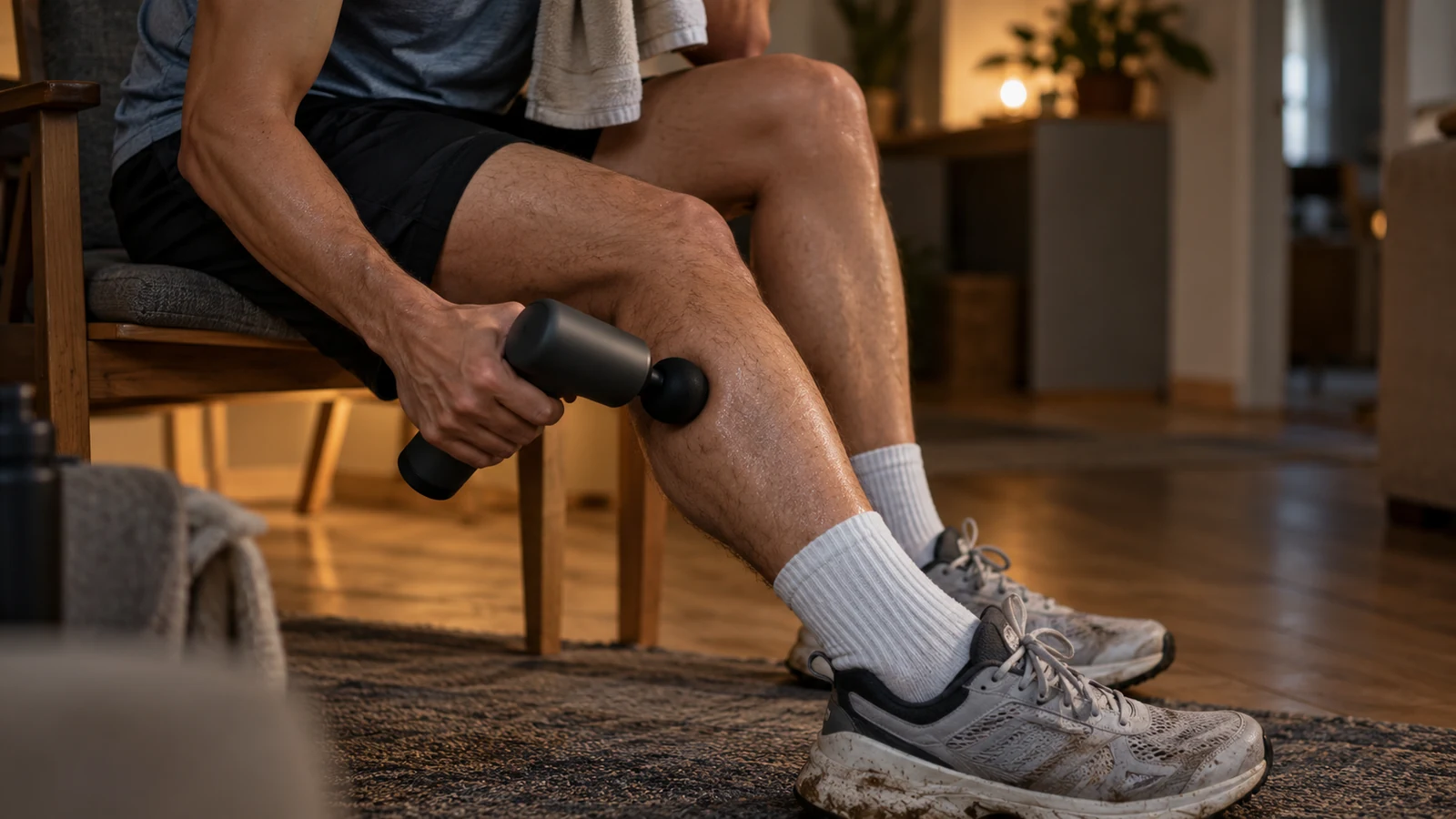
A massage gun is a handheld device that delivers rapid, short pulses to a muscle. Choosing one comes down to a handful of checks: whether the motor keeps going under pressure, how deep the stroke is, how loud it is, how long the battery lasts, and whether the heads and handle suit the places you want to reach. A fair ranking of brands needs independent testing, and none is cited here, so we give criteria instead. We also cover the part many guides skip: situations where you should not use one, and when to see a doctor instead.
Who it suits: people who exercise regularly and want a tool for sore, tight muscles after a session, and who are willing to read the cautions. Who it doesn't suit: anyone with a blood clotting disorder, a fracture, an acute muscle or ligament injury, or a heart, blood pressure, diabetes or nerve condition who has not spoken to a healthcare professional first.
Which brand of massage gun is considered the best?
We do not name one, and you should be cautious of any page that does without showing how it tested. Neither of the two guides we draw on is an independent laboratory test. One is a buying guide on a fitness site, evaluated in May 2026, which focuses on what to look for rather than a verdict. The other is a Marathon Handbook explainer, last updated in July 2023, whose focus is when to avoid the device.
The practical consequence is that price and brand name are poor shortcuts. The fitness site makes the same point about attachment kits: it advises against buying "based on attachment count alone". What matters is whether the device does what you need at a noise level and weight you can live with. That is why we give criteria and three Amazon.co.uk searches, and leave the comparing to you.
massage gun foam roller massage ball Amazon affiliate links
What specifications matter when you choose one?
| Specification | In plain terms | What to look for in a listing |
|---|---|---|
| Stall force | How much pressure you can lean on the gun before the motor bogs down | A stated figure with its units, and buyer comments about the motor stalling |
| Amplitude | The depth of each stroke | A figure in millimetres, compared only within one listing, since makers measure differently |
| Noise | How loud it is at the speed you will use | What real users say, rather than a bare decibel figure |
| Battery | How long it runs per charge | Stated run time at your likely speed, and a standard charging cable |
| Weight and handle | How tiring it is to hold, and whether you can reach your own back | Weight, handle shape and grip comfort |
| Heads | The attachments in the box | Useful shapes, not a huge random kit |
What is stall force and why does it matter?
Stall force is, in plain terms, how much pressure you can lean on the gun before the motor bogs down. The fitness site says the better models have enough to "stay moving under pressure", and its scoring asks whether a gun "stays moving under firm pressure". If a gun stalls the moment you lean, you will stop using it or you will use it too lightly to get what you wanted. Look for listings that state a stall force figure and the units, and for buyer reports that describe the gun stalling.
What is amplitude?
Amplitude is the depth of each stroke. The same site says to look for a "deeper stroke where appropriate", and says premium guns "feel different from buzzers". A deeper stroke reaches larger muscles; a shallow one feels more like a vibration. Listings give a figure in millimetres, but different makers measure in different ways, so treat the number as a comparison within a listing, not between brands.
How loud is too loud?
The fitness site asks whether a gun is "usable at home, office or apartment", and says plainly that "loud guns get used less". Decibel figures are hard to compare, so read what real users say, and think about who is next door and when you will use it.
What about battery life and weight?
The fitness site lists battery life as a ranking factor but gives no figures, and the Marathon Handbook explainer does not cover battery or noise. Look at the listing's stated battery time at your likely speed, whether it charges by a standard cable, and how heavy the device is, because a heavy gun is tiring to hold. The fitness site says the best models should not be "so much bulk that they become a chore to use".
Which handle and heads should you look for?
The fitness site says that "handle shape matters as much as motor strength" when you need to reach your own back, lats or hips, and that grip comfort is key for self-use. It lists ball, flat, fork, bullet and cushion heads as useful, and warns that useful heads beat "huge but random kits".
Which massage gun head is the best?
The Marathon Handbook explainer describes the commonly supplied heads this way:
| Head | Described use | Our caution |
|---|---|---|
| Round ball (soft foam) | Sensitive areas such as the shins | A sensible first head |
| Flat, broad head | Larger areas such as the thigh | Covers most big muscle groups |
| Tapered bullet | Concentrated work on a tight spot, such as a knot in the calf | Keep passes short and light |
| Fork | The source suggests it for the tissue around the spine | Keep the fork off the spine itself; the same source says to avoid bony areas |
| Wedge | Scraping movements, such as the sole of the foot or the outside of the thigh | Use slowly |
There is no single best head. A ball and a flat head cover most needs, and it is better to own two you use than six you do not. The same source advises using a slow up-and-down motion with pauses over tight spots, and the fitness site advises starting with lower speed and short passes.
How long should you use a massage gun on one area?
There is no agreed figure. The Marathon Handbook explainer says there is no universally defined ideal duration and recommends allowing 2 to 5 minutes for using a percussive massager after a workout, and the fitness site advises short passes at a low speed to begin with. Start gently and short, notice how the area responds the next day, and do not use it to push through pain.
How should you work through a first session?
- Choose the soft ball or flat head and the lowest speed.
- Rest the gun on the muscle with light pressure; the guides advise starting gently.
- Move slowly up and down the muscle belly, pausing over tight spots for a few seconds.
- Keep clear of bones, joints and the spine.
- Stop at once if you feel sharp pain, numbness or tingling.
- Check the area the next day. If it feels worse, leave it alone and speak to a professional.
Are massage guns good for back pain?
We cannot say they are. The NHS back pain page (October 2026) does not mention massage guns. Its advice is to stay active and carry on with daily activities, and not to stay in bed for long periods. It lists signs that need medical advice: back pain that does not improve after a few weeks of home treatment, pain that stops you doing everyday tasks, pain that is worse at night or at rest, or pain with unexplained weight loss, a lump or swelling. It also lists situations that need urgent help, including back pain with a fever, sudden severe pain, pain, tingling or weakness in both legs, numbness around the genitals, or bladder or bowel changes, which need 111, 999 or A&E.
On where to point a gun, the Marathon Handbook source says to avoid the spine and other bony areas such as the elbows, knees and hip bones, because they have less soft-tissue padding. If you have back pain, speak to a GP or physiotherapist before using a gun near your back, and do not treat a gun as a substitute for diagnosis.
When should you avoid using a massage gun?
The Marathon Handbook explainer (by Ben Gibbons, reviewed by Katelyn Tocci, last updated July 2023) lists situations to avoid:
- Muscle strains. The vigorous hammering motion can potentially worsen muscle damage; it suggests gentle pressure around the injury, not on it.
- Sprains and torn ligaments, especially soon after the injury; ask a medical professional first.
- Stress fractures and broken bones, including during healing.
- Deep vein thrombosis or blood clotting disorders, because of a risk of dislodging a clot.
- Medical conditions: consult a healthcare professional first if you have uncontrolled high blood pressure, heart disease, diabetes or certain neurological conditions.
- Bony areas: the spine, elbows, knees and hip bones.
Treat this as a minimum, not a full list. The source is a fitness publication from 2023, not a clinical guideline, so ask your own doctor about your situation. If you are pregnant, taking medication that affects clotting or have had surgery, ask before you buy.
What does the NHS say about a fresh sprain or strain?
The NHS sprains and strains page (October 2026) recommends PRICE therapy for the first two to three days: protection, rest, ice, compression and elevation. To help prevent swelling, it says to avoid heat, alcohol and massage for the first couple of days. That is a direct reason to leave a massage gun in the cupboard after a fresh injury. The page tells you to see a GP if a sprain or strain is getting worse or not improving after self-treatment, and to contact NHS 111 if the injury is very painful, increasingly swollen or bruised, very stiff, or you cannot bear weight or walk more than a few steps. It says to go to A&E or call 999 if you heard a crack, the body part has changed shape or points at an odd angle, or it is numb or tingling.

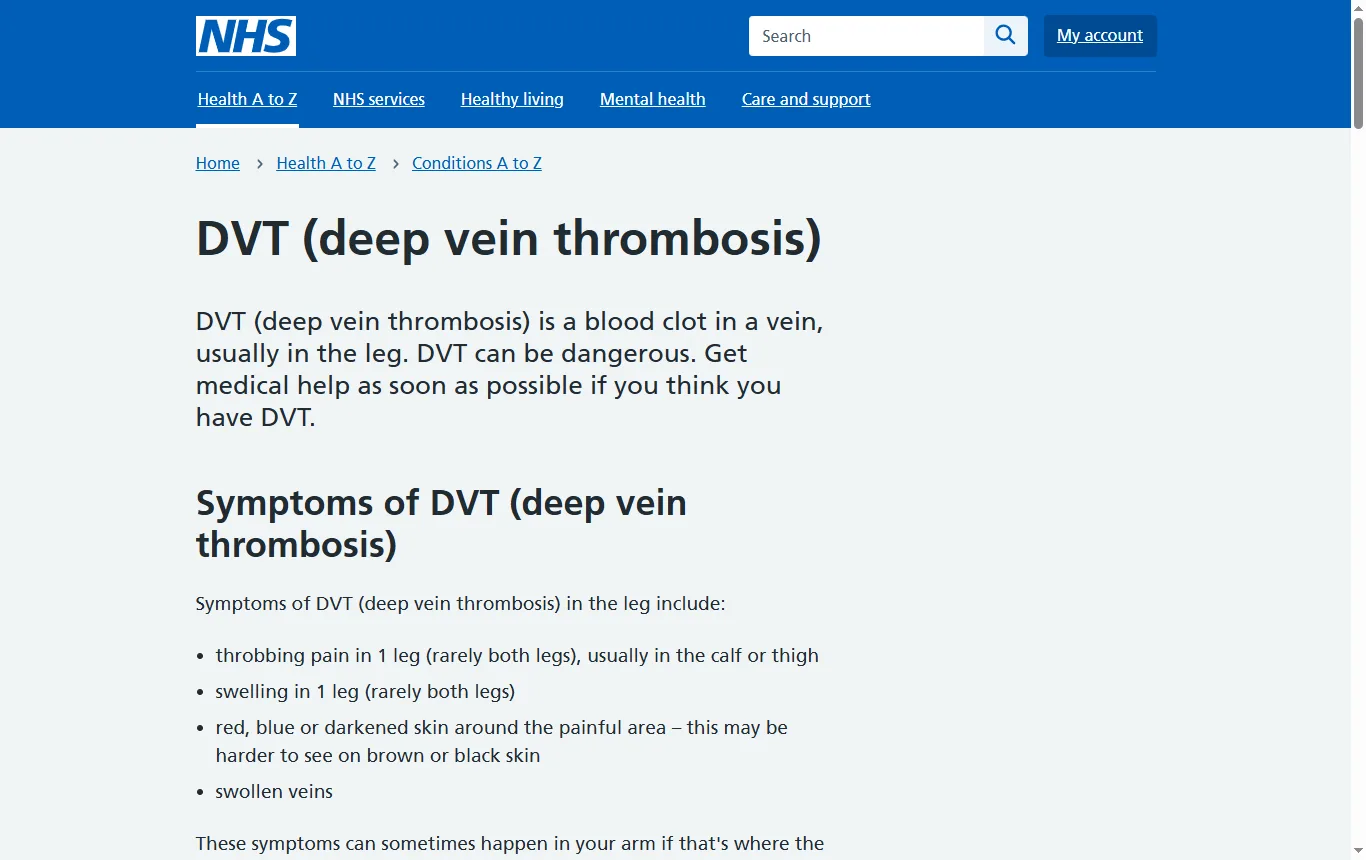
What are the warning signs of a blood clot in the leg?
Because deep vein thrombosis is on the list of reasons to avoid a gun, know what it looks like. The NHS DVT page (October 2026) lists throbbing pain in one leg, usually in the calf or thigh, swelling in one leg, red, blue or darkened skin around the painful area, and swollen veins. It says to ask for an urgent GP appointment or call NHS 111 if you think you have DVT, and to call 999 or go to A&E if you also feel short of breath or have chest pain, because that could be a life-threatening pulmonary embolism. The NHS page does not discuss massage, but the Marathon Handbook explainer lists DVT as a reason to avoid a gun. If you have any of these signs, keep the gun away from the leg and get advice.
What are the downsides of using a massage gun?
- Risk of overdoing it. Rapid percussion on an injured muscle can make things worse, per the source above.
- Noise and bulk. A loud, heavy device is one you will use less.
- False sense of cure. Treating soreness with a gun can hide a problem that needs a diagnosis.
- Cost against use. The honest question is how often you will pick it up; a foam roller or a massage ball, the other two searches we suggest, are simpler and quieter, though they work differently.
- Evidence. We make no promise about recovery, performance or pain relief, and we do not assess the research on massage guns.
If your soreness comes from a new routine, the cheapest fix may be the routine itself. Our guide to adjustable dumbbells → shows how to add weight in small steps, our page on resistance bands → covers gentle strength work with a clear way to scale the effort, and the guide to yoga blocks → explains props that help you hold stretches with less strain.
What are your rights if it arrives faulty or isn't what you expected?
GOV.UK's guidance for sellers on returns and refunds (October 2026) says that for online orders you can cancel without giving a reason by telling the seller within 14 days of receiving the goods and then returning them within a further 14 days, and the seller must refund within 14 days of receiving them back. Faulty goods give a right to a full refund, and a return within six months must be repaired or replaced unless the seller shows it was not faulty when sold. Warranties do not remove those rights. The guidance lists some exceptions, including sealed items that cannot be returned for hygiene reasons once opened, so check the listing for how a device is described.
Amazon.co.uk's returns policy (October 2026) adds that most items can be returned within 30 days of delivery if they are new, unused and undamaged, that Amazon can reduce a refund if you have handled an item in a way that lowers its value, and that return costs are refunded only for items sold or dispatched by Amazon and advertised as eligible for free returns. For a device sold by a third-party seller, read that seller's terms before you pay.
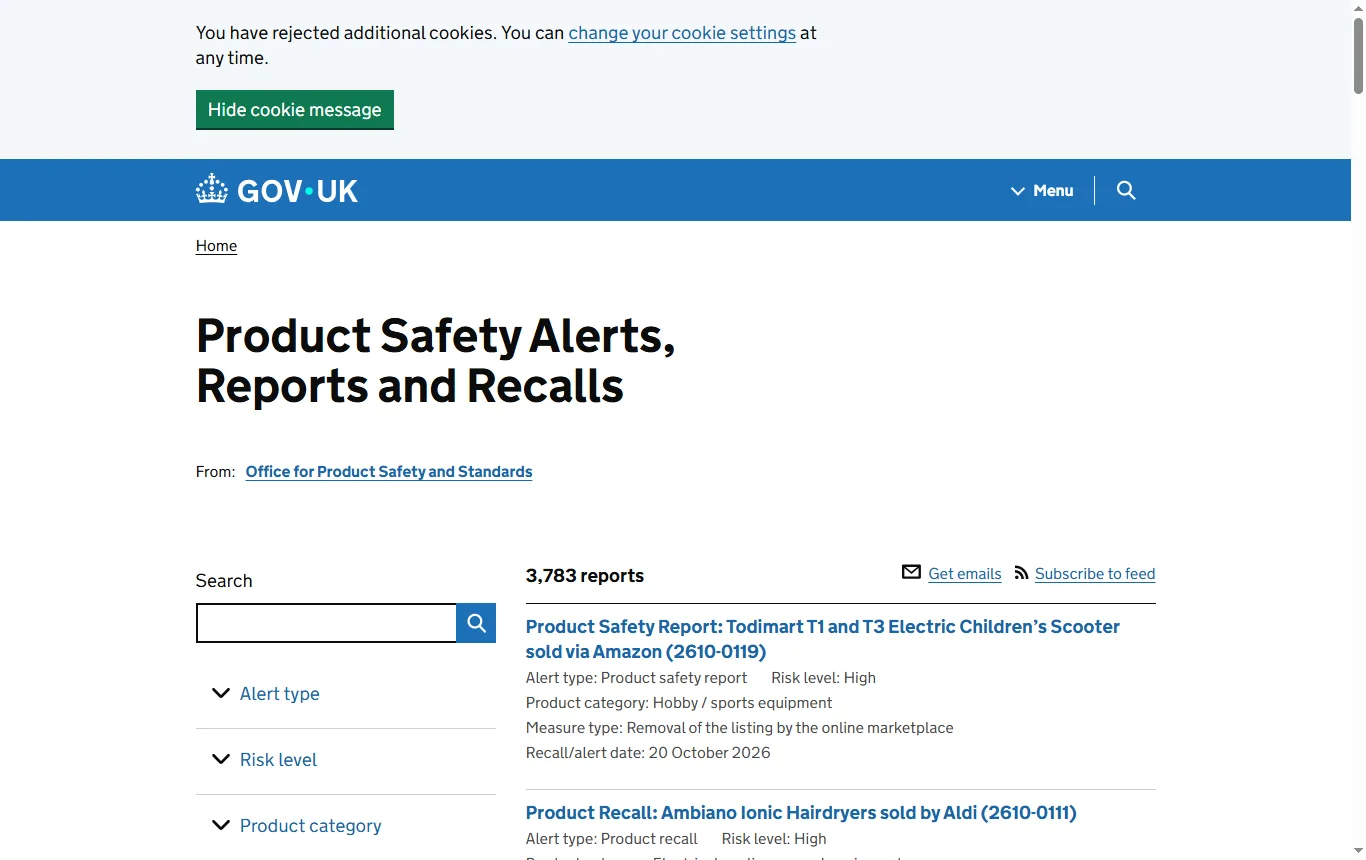
Because a massage gun has a rechargeable battery, use the charger supplied, do not use a damaged device and check the OPSS product safety alerts list on GOV.UK from time to time for any recall. The list can be searched and filtered by category, and you can subscribe to updates.
What should you check before you pay?
- Does the listing state stall force and amplitude, and in what units?
- What do users say about noise at the speed you will use?
- How long does the battery last at that speed, and how is it charged?
- How heavy is it, and can you reach the places you want to?
- Which heads come in the box, and are they ones you will use?
- What are the warranty and returns terms, and who is the seller?
- Have you checked the OPSS recall list for the brand and model?
Not sure? Tell us where you feel sore and what you do
Frequently asked questions
Which brand of massage gun is the best?
We do not rank brands, because the guides cited here do not offer an independent test of products. Choose on stall force, amplitude, noise, battery, handle and heads.
Are massage guns good for back pain?
We cannot say. The NHS advises staying active and lists signs that need a GP, 111 or 999, and it does not mention massage guns. The guides cited here say to avoid the spine itself.
Which massage gun head is the best?
There is no single best. A ball and a flat head cover most needs; bullet heads suit tight spots and wedges suit scraping movements.
Is Theragun the best massage gun?
Theragun is a well-known brand, but we cite no independent comparison of it with others, so we make no claim either way.
What are the top 5 massage guns?
We do not publish a top five, because a ranking needs independent test data. Use the checklist and the three Amazon.co.uk searches.
What are the downsides of using a massage gun?
You can overdo it, it may be loud and bulky, and it can mask a problem that needs a diagnosis. The guides cited here list several situations where you should avoid one.
See also
 ComparisonFolding treadmill buying guide: space, noise, knees and safetyHow to choose a folding treadmill or walking pad: belt size, space, noise, knees, NHS activity guidance and your return rights, plus a pre-purchase checklist.
 GuideFoldable weight bench: what to check before you buy oneHow to choose a foldable weight bench: load rating, stability, pad gap, folded size, safe use and UK return rights, in a practical pre-purchase checklist.